

Purple whitening toothpaste may make yellow tones look less noticeable for a short time, but that visual color correction is not the same as removing stains or changing a tooth’s underlying shade. The distinction matters when a product promises a quick whitening effect: a brighter-looking smile does not necessarily mean your teeth have been bleached.
If you’re curious but cautious, start by looking at the formula. Some purple toothpastes rely on optical pigments, while others may also contain whitening ingredients. The purple color alone does not tell you what a toothpaste can do or whether it suits your everyday brushing routine.
This guide explains what results you can realistically expect, how purple toothpaste compares with conventional toothpaste and peroxide-based whitening, and what to look for when choosing a formula. It also covers why fluoride and other everyday oral-care needs matter alongside appearance. SK Store sells Purple Teeth Whitening Toothpaste, an option to consider by checking its product details and label.
Key Takeaways
- Use the product label to guide brushing, rinsing, and how often to use a toothpaste.
- Compare purple whitening toothpaste with everyday fluoride toothpaste and peroxide-based products by purpose and ingredients.
- Check whether a formula contains fluoride to see how it fits into your everyday cavity-care routine.
- Read the label for ingredients, directions, warnings, and the specific whitening results the product claims.
- Consider SK Store’s Purple Teeth Whitening Toothpaste with realistic expectations about what its stated features can do.
What Does Purple Whitening Toothpaste Actually Do?
Purple whitening toothpaste uses colored pigments that may visually offset yellow tones while they remain on the teeth. This is an effect on perceived color, not automatic proof that the paste has bleached tooth structure or removed a stain. A formula may also contain other ingredients, so assess those separately by reading the product label.
How the purple-and-yellow color relationship works
Think of a purple filter placed over a yellow-tinted image: the opposing colors can make the yellow seem less noticeable. Purple pigments in toothpaste use a similar visual principle. They may influence the perceived surface color while present, creating the impression of a brighter smile without changing the tooth’s underlying shade.
The effect can vary with the formula, how it’s used, lighting, and the natural appearance of an individual smile. For example, the color you see in a bathroom mirror may look different in daylight. The color relationship explains how the effect can work, but it cannot guarantee a particular result.
Color correction versus chemical whitening
Color correction changes appearance. By itself, it does not show that surface stains have been removed or that a tooth’s intrinsic shade has changed. Surface stains sit on the outer tooth surface, while natural tooth color also reflects the structure beneath it. Pigment may visually offset yellow tones, but that is different from demonstrating a change to either source of color.
Peroxide-based whitening works differently. Peroxide ingredients can chemically lighten tooth color, but the result depends on the product and how it’s used. Check the label rather than assuming that a purple color means a formula contains peroxide, or that a whitening claim tells you which ingredients are doing the work. For a broader overview of whitening methods, stain types, and chemicals, see Teeth whitening.
A temporary appearance effect isn’t the same as a lasting change in tooth shade. That distinction helps set expectations: a color-correcting paste may change how yellow tones appear, while a lasting shade change requires a different kind of effect. Neither the paste’s color nor a quick visual impression confirms stain removal.
When comparing formulas, look for the specific active ingredients and directions on the package. If a toothpaste lists peroxide or another whitening ingredient, consider that separately from its purple pigments. If the label does not make the mechanism clear, avoid assuming that the color alone will deliver chemical whitening. In practical terms, pigments may affect appearance while present, but the exact result depends on the formula, use, lighting, and your smile.
How Purple Whitening Toothpaste Creates Its Visible Effect
As the paste spreads over teeth, its colored pigments can mingle with saliva and sit briefly across the visible surface. Against yellow tones, that color may shift how light reflects back to your eyes, making some areas look less yellow. It changes perceived color; it does not permanently alter the tooth.
The visible effect depends on the formula and how it’s used. Pigment type and concentration, brushing, rinsing, saliva, lighting, and natural tooth color can all influence what you notice. That’s why the same paste may look more effective on one smile, or in one setting, than another.
Surface stains and natural tooth shade are different
Coffee, tea, and strongly colored foods can leave external stains on the tooth surface. Pigments may influence how those surface tones look, but that does not establish that the stain has been removed. Different types of discoloration can respond differently, so a visual change alone does not reveal its cause.
Natural tooth shade also reflects the underlying tooth structure, including dentin beneath the enamel. A surface pigment does not reach through enamel to change dentin. This distinction helps set a fair expectation: purple toothpaste may affect the appearance of color at the surface, but it should not be treated as proof of a permanent change to natural tooth shade.
Why the appearance may not last
Brushing and rinsing can remove or disperse pigments, and saliva can gradually dilute what remains. Appearance can also shift as teeth go from freshly brushed and wet to dry, or as lighting changes from a bright bathroom to softer indoor light. A quick mirror check may therefore look different from a later glance, even without any lasting change in tooth shade.
That short-lived color effect differs from gradual whitening associated with verified active ingredients in some products. The ingredient list matters: purple color alone does not confirm that a toothpaste contains peroxide or another active whitening agent. The American Dental Association’s guidelines on teeth whitening offer context on whitening approaches and considerations. For a specific toothpaste, rely on its own ingredient list and directions.
There is no universal timeline for how long a color effect will remain visible. Formulas and use vary, so follow the product label rather than assuming a set brushing time or repeat schedule. If you’re interested in trying this appearance-focused option, you can explore purple toothpaste as part of your oral-care routine. Check the product details for the information that matters to you.
Purple Toothpaste Compared With Other Whitening Options
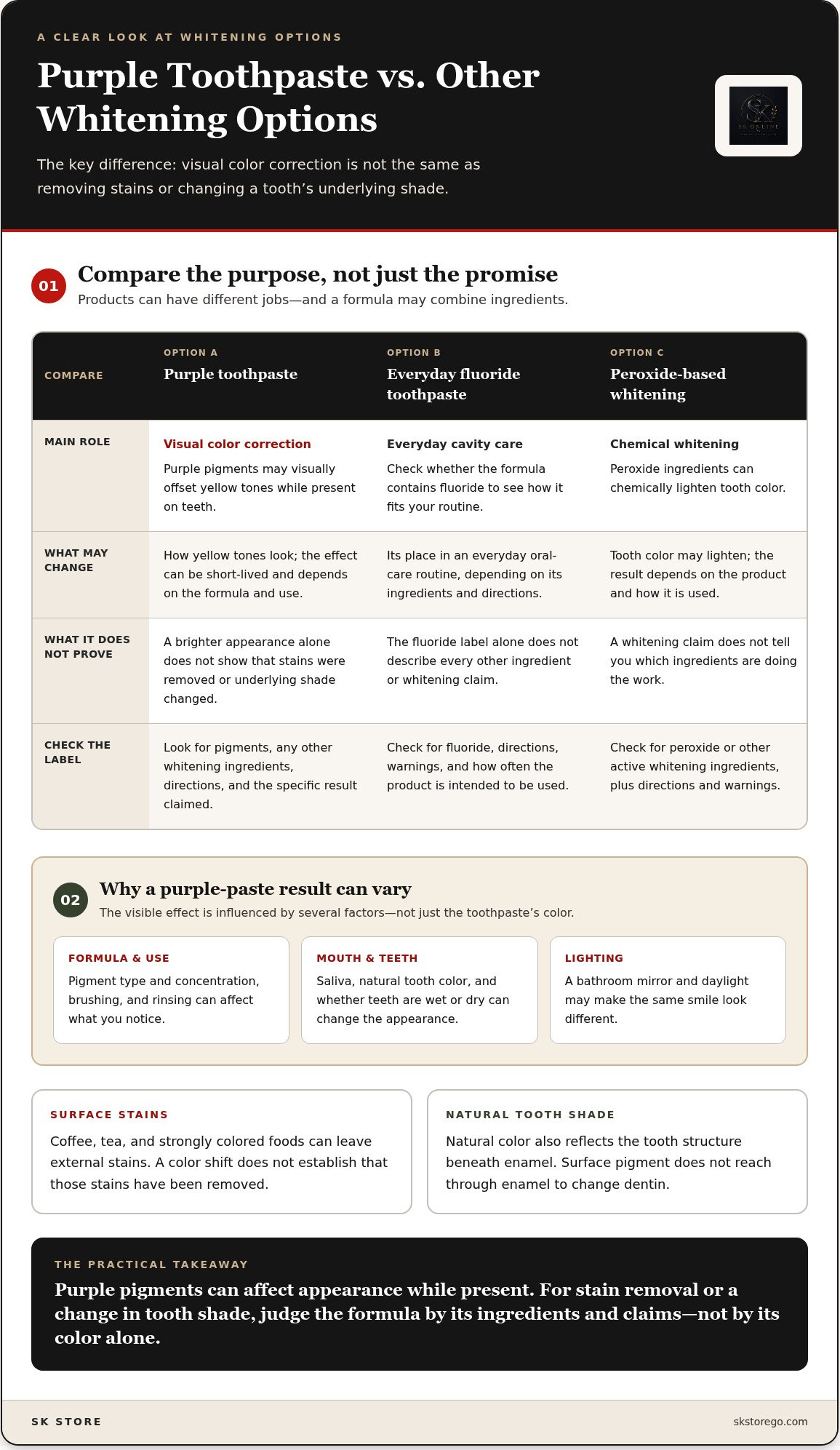
Choosing a toothpaste or whitening product gets easier when you separate its purpose from its promise. Purple pigments, fluoride, and peroxide do different jobs, and a product may combine ingredients. Compare the label and directions rather than assuming that every formula in a category works the same way.
| Option | Main purpose | Likely result | What to check |
|---|---|---|---|
| Purple toothpaste | May visually correct yellow tones; may also clean teeth or contain other active ingredients. | A color-related appearance effect, with any additional whitening action depending on the formula. | Check for fluoride, peroxide or other active ingredients, directions, and the specific claims made. |
| Ordinary fluoride toothpaste | Supports routine cleaning and, when formulated with fluoride, cavity prevention. | Helps maintain oral hygiene; stain effects depend on the individual formula. | Check fluoride content, directions, and whether stain-removal claims are stated on the label. |
| Peroxide-based product | Uses peroxide, when present, as a chemical whitening ingredient. | May lighten tooth color according to the product’s formulation and instructions. | Verify the peroxide ingredient, directions, warnings, and any sensitivity guidance. |
Purple toothpaste versus regular toothpaste
Purple toothpaste is often positioned around color correction, while ordinary toothpaste is generally part of a daily cleaning routine. A standard fluoride toothpaste may help protect against cavities, but fluoride is not a whitening ingredient. Some toothpastes may also address surface stains, depending on their formula and label claims.
Do not assume a purple formula replaces your usual oral-care needs. Check the specific product’s fluoride content and directions, and consider whether it is intended for routine brushing. Purple color alone does not tell you whether it contains fluoride, how it should be used, or what other ingredients are included.
Purple toothpaste versus peroxide whitening
Peroxide-based formulas use a different mechanism from pigment-based color correction when peroxide is present. The product label is the best guide: it identifies ingredients and instructions, helping you distinguish a cosmetic appearance claim from one tied to an active whitening ingredient. Do not infer the formula from packaging color or broad wording such as “whitening.”
Use directions as written, and pay attention to any warnings about sensitivity or irritation. Individual experiences can vary, so another person’s result or comfort level will not predict yours. If you’re comparing purple whitening toothpaste with a peroxide product, focus on the outcome you want and the ingredients you’re comfortable using. A clear label makes the comparison more grounded.
In short, fluoride supports a different goal from whitening, pigments affect appearance, and peroxide products rely on an active ingredient when included. Match the option to your routine, then follow its own directions rather than applying assumptions from another product type.
How to Use Purple Whitening Toothpaste With Realistic Expectations
A simple routine makes it easier to follow the directions and judge what you actually notice. Treat purple whitening toothpaste as one part of oral care, not a reason to brush longer or more often than the label recommends. Its appearance effect may be subtle or temporary, and a mirror check can be influenced by lighting.
A simple routine for trying a purple formula
Start with the product’s own directions. Use the stated amount, brush as instructed, and rinse as directed. Keep your usual brushing habits consistent while trying it, so a change in your routine does not cloud your impression. For a fair comparison, look at your smile in similar lighting each time rather than relying on a single glance.
- Read the label. Review the directions, ingredients, and warnings before using the toothpaste. Follow the stated amount and instructions for use.
- Brush as directed. Keep to the product’s instructions and your normal oral-care routine. Do not extend brushing or add extra use to chase a stronger effect.
- Rinse as instructed. Follow the label’s rinsing guidance rather than assuming every formula should be used the same way.
- Assess the appearance. Compare your smile under similar lighting and conditions. Notice what you see, but do not treat a quick visual impression as proof of stain removal or lasting shade change.
When to reconsider your whitening routine
More is not necessarily better. Using a product beyond its label directions will not guarantee a brighter result, and it may increase the chance of discomfort. If irritation occurs, stop using the product and follow appropriate oral-health guidance. Do not try to push through discomfort or compensate by changing the amount or frequency.
Persistent discoloration can have different causes, and a toothpaste may not address every one. If you’re concerned about ongoing changes in tooth color, sensitivity, or another oral-health issue, seek advice from a dental professional. That is a more useful next step than repeatedly switching products or increasing use without guidance.
Keep expectations grounded: a visible change may depend on the formula and how you use it, while everyday oral care still matters. To explore this option, browse Purple Teeth Whitening Toothpaste and review the product information for details that fit your routine.
Explore SK Store's Purple Teeth Whitening Toothpaste
SK Store sells Purple Teeth Whitening Toothpaste for shoppers considering a purple formula as part of their oral-care routine. The product name identifies its category, but it does not establish which ingredients create its effect or whether it is intended to support everyday brushing. Use the product details and label to understand its stated claims and decide whether they match the result you’re looking for.
A little label-reading can make the choice more straightforward. Look beyond the word “whitening” and check the ingredient list, directions, cautions, and specific claims on the packaging. Those details help you understand what the formula is designed to do without assuming that it contains purple pigment, a whitening ingredient, or fluoride.
What to look for on the product label
Before adding a purple whitening toothpaste to your routine, use the label as your guide rather than relying on color or general product wording. Check for the listed colorants and any active whitening ingredients, including peroxide if present. Look for fluoride information, the stated amount to use, brushing and rinsing directions, and warnings or ingredient disclosures relevant to your needs.
- Ingredients: Identify the colorants and any active whitening ingredients actually listed.
- Everyday care: Check whether fluoride is included and read the product’s intended-use directions.
- Use and cautions: Follow the stated brushing and rinsing instructions, and review warnings before use.
- Claims: Match statements about whitening or stain removal to the specific details provided on the label.
This keeps the decision grounded in the formula itself. Do not infer sensitivity, enamel effects, stain removal, or how long results may last from the product’s purple color or name alone.
Decide whether it fits your routine
Start with your goal. If you’re curious about a visual color-correction effect, look for clear wording about that purpose and keep in mind that appearance effects differ from lasting changes in tooth shade. If everyday care is your priority, review fluoride information and intended use. If you want active whitening, look for a specific active ingredient and follow its product directions.
Then consider whether the instructions fit comfortably into your existing routine. Avoid using more than directed to chase a faster or stronger result, and stop if the product causes irritation. A product’s label can help set expectations, but it cannot promise the same visible outcome for every smile. Keep your regular oral-care needs in view as you decide.
If the product’s stated purpose and directions suit what you’re looking for, explore Purple Teeth Whitening Toothpaste at SK Store. Review its label before use, choose it with clear expectations, and keep your routine simple and manageable.
Choose a Whitening Routine That Fits You
Decide what matters most: a brighter-looking effect, everyday oral care, or a product with active whitening ingredients. Let that goal guide your choice, and keep the product directions part of the plan. A manageable routine you understand is easier to follow than one built around expectations the label cannot support.
If purple whitening toothpaste sounds like a fit, review its product details before adding it to your routine. SK Store sells Purple Teeth Whitening Toothpaste alongside other oral-care products through its online store.
Explore Purple Teeth Whitening Toothpaste at SK Store and choose your next step with confidence. Small, informed choices can make everyday self-care feel refreshingly simple.
Frequently Asked Questions
Does purple whitening toothpaste permanently whiten teeth?
Usually, no. Purple whitening toothpaste that relies on pigments can make teeth look brighter without permanently changing their shade. If a formula contains an active whitening ingredient, its effects depend on that ingredient and the product’s directions. Check the label to see what the toothpaste is designed to do. For a lasting change or concerns about discoloration, ask a dental professional which options suit your teeth.
Can purple toothpaste remove coffee or tea stains?
Not necessarily. Purple pigments may make yellow tones from surface staining look less noticeable, but that visual effect does not confirm the stain has been removed. For example, teeth may look different just after brushing than they do later in the day. Check whether the toothpaste specifically claims to remove surface stains and review its ingredients. Persistent discoloration may have another cause, so a dental professional can offer individualized guidance.
Is purple toothpaste safe to use every day?
It depends on the specific formula and its directions, so there is not one answer for every purple toothpaste. Read the label for intended use, fluoride information, and warnings, and do not exceed the recommended directions. If brushing with it causes irritation or discomfort, stop using it. People with existing sensitivity, gum irritation, or other oral-health concerns can ask a dental professional for advice before adding a whitening product to their routine.
Can purple toothpaste whiten crowns, veneers, or fillings?
No toothpaste should be assumed to change the shade of crowns, veneers, or fillings like natural tooth structure. Whitening products may affect natural teeth differently from dental restorations, which can leave a visible mismatch. If you have restorations near your front teeth, consider how a shade difference could affect your smile before using a whitening product. A dental professional can advise you on your specific restorations and goals.
How long does the purple toothpaste effect last?
There is no single timeline that applies to every formula or person. The appearance may change after brushing as pigments are rinsed away, saliva dilutes them, or lighting shifts. Rather than expecting a fixed number of minutes or hours, check the product’s stated claims and directions. If you’re assessing a result, compare your teeth under similar lighting and at a similar point in your routine.
Can I use purple toothpaste with whitening strips?
Do not combine them automatically. First read both products’ instructions and warnings, since using separate whitening products together could increase irritation or sensitivity for some people. If either label advises against combining products, follow that guidance. If the directions do not explain whether they can be used together, or you already experience tooth sensitivity, ask a dental professional before pairing them. Keep each product within its stated directions.
Does purple toothpaste contain peroxide?
Some purple toothpastes may contain peroxide, while others rely on pigments or use different ingredients. The color alone will not tell you which kind you have. Check the ingredient list for terms such as hydrogen peroxide or carbamide peroxide, then read the product’s whitening claims and directions. Check the current label for SK Store’s Purple Teeth Whitening Toothpaste rather than assuming it contains peroxide.

