

Before you twist open a whitening pen, read the label. If you’re wondering how to use a teeth whitening pen, a careful routine can help you apply the gel neatly and avoid unnecessary contact with your gums. Follow the directions for your specific product, since application steps and timing can vary.
This guide covers how to prepare, apply the gel, follow aftercare directions, and avoid common mistakes. It also explains what results to expect and when to pause if your teeth or gums feel uncomfortable. Whitening pens can be convenient, but results and sensitivity vary. More gel or more frequent use isn’t a shortcut to better results, so let the product instructions set the pace.
Key Takeaways
- For how to use a teeth whitening pen, follow the product label for application, timing, and frequency.
- Prepare a clean, dry application area only if the directions call for it, and aim to keep gel off your gums.
- Pens, strips, and whitening toothpaste fit different routines. Compare their application steps before choosing a format.
- Sensitivity and gum irritation can vary. Know when to pause and seek dental advice.
- Check the label, ingredients, directions, and routine fit, including for the Teeth Whitening Pen - Low Sensitivity Gel, Mint (Pack of 2).
What a Teeth Whitening Pen Does, and What It Cannot Promise
A teeth whitening pen is a handheld applicator for placing whitening gel on tooth surfaces. Its formula, directions, and intended use depend on the specific product. The pen format can be convenient to carry, but it doesn’t mean every product works the same way or guarantees a particular result.
Think of a pen as an optional cosmetic step, not a replacement for brushing, flossing, or other everyday oral care. Whitening products vary in method and ingredients. For a general overview of approaches and possible side effects, see Tooth whitening. For your own pen, rely on its label. Instructions for one product may not apply to another.
How a whitening pen fits into at-home whitening
A pen lets you apply gel to selected tooth surfaces, rather than covering teeth with a strip or tray. The applicator doesn’t tell you what the formula contains or how long it should stay on your teeth. If you’re learning how to use a teeth whitening pen, start with the specific package directions, not a routine you’ve seen elsewhere.
Whitening is separate from basic oral hygiene. A pen won’t replace cleaning plaque from teeth or caring for your gums. Treat it as a cosmetic addition, and don’t apply it more often or differently to try to speed up a change. Follow the label, even if another product has a different schedule.
What results depend on
Visible results can depend on your starting tooth shade, the type of discoloration, and whether you follow the product directions. Surface stains, such as those associated with coffee or tea, may respond differently from discoloration that originates within a tooth. A pen can’t promise that every tooth will change by the same amount, or at all.
Natural teeth and dental restorations can also respond differently. Whitening products don’t change the color of crowns, veneers, or fillings. If natural teeth change shade, a restoration may look different by comparison. Keep expectations measured and consider how visible restorations fit into your smile.
There’s no universal timeline or lasting-effect guarantee for every pen. Use the product only as directed, and avoid judging its results against someone else’s. If the instructions or intended use are unclear, pause before applying the gel rather than guessing. Careful use starts with understanding what the product is designed to do and what it can’t promise.
How to Use a Teeth Whitening Pen: A Careful Step-by-Step Routine
Start with the product label. Pens can differ in how the gel is dispensed, where it should be applied, how long it stays on teeth, and what to do afterward. Use the steps below as general guidance, not as a substitute for the instructions supplied with your pen. If a step here differs from the label, follow the label.
Prepare before applying the whitening gel
Read all directions and warnings before opening the pen, including notes about who should avoid using it. Set up a mirror and tissues in a well-lit spot so you can see the tooth surfaces and manage any stray gel. Don’t add brushing, drying, or waiting steps just because they seem helpful. Do them only if the product’s instructions call for them.
Apply the gel and finish as directed
Take your time, especially if you’re using the pen away from home. Aim the applicator at the tooth surfaces specified on the label, and avoid your gums, lips, and other soft tissues. Use the directed amount and method, then follow the instructions for contact time, rinsing, and eating or drinking. The American Dental Association guidelines on whitening also discuss possible side effects, including sensitivity and gum irritation.
In short: prepare as directed, apply a controlled, even layer to the intended teeth, and finish according to the product label.
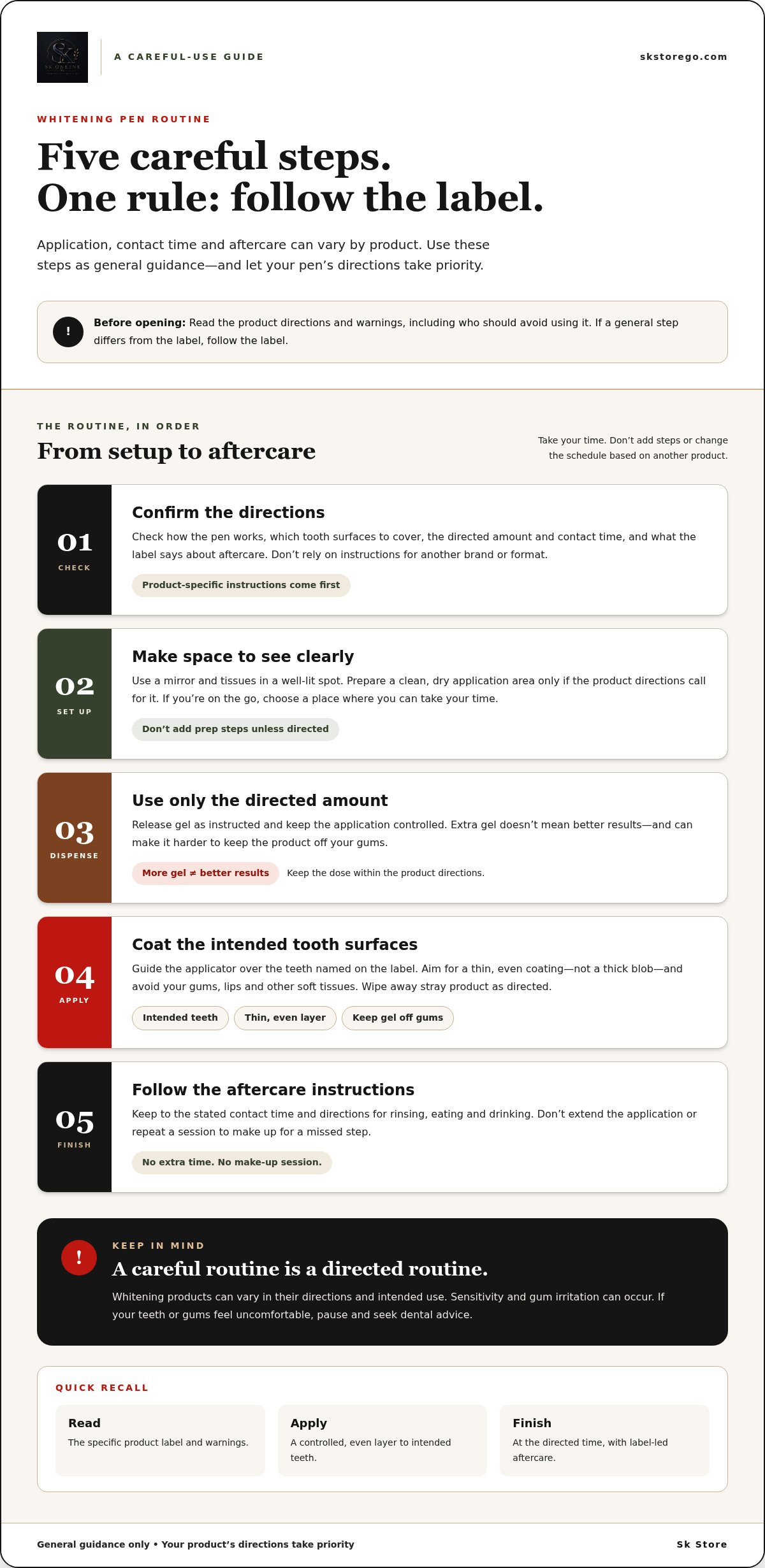
- Check the directions. Confirm how the pen works, which tooth surfaces to cover, and what the label says about amount, contact time, and aftercare. Don’t rely on instructions for another brand or format.
- Set up your space. Use a mirror and tissues to help you see and apply the gel carefully. Prepare a clean, dry application area only if the directions call for it. If you’re on the go, choose a spot where you can take your time instead of rushing.
- Dispense with control. Release gel as instructed. Avoid squeezing out extra product: more gel doesn’t mean better results and can make it harder to keep the application off your gums.
- Coat the intended surfaces. Guide the applicator over the teeth named in the directions, aiming for a thin, even coating rather than a thick blob. Keep your lips and tongue clear of the gel as best you can, and wipe away stray product as the label directs.
- Complete the routine. Follow the stated contact time and instructions on rinsing, eating, and drinking. Don’t extend the application or repeat a session to make up for a missed step.
For a portable option, browse the Teeth Whitening Pen - Low Sensitivity Gel, Mint (Pack of 2) at Sk Store. Read its directions before use, and don’t assume its application steps match another product’s routine.
Whitening Pen Application Compared with Other At-Home Options
A whitening pen, whitening strips, and whitening toothpaste fit into at-home oral care in different ways. Choose based on application preference and routine, not an assumption that one format is stronger or more effective. Products can use different formulas and have different intended uses, so their directions, timing, and results aren’t interchangeable.
| Format | Application style | Routine fit | Directions to follow |
|---|---|---|---|
| Whitening pen | Gel is applied to selected tooth surfaces with an applicator. | May suit someone who prefers targeted application. | Follow the label for application method, amount, timing, and aftercare. |
| Whitening strips | A strip is placed against the teeth as directed. | May suit someone comfortable using a product that covers a broader area. | Use the product’s own instructions for placement and wear time. |
| Whitening toothpaste | Used with a toothbrush as part of brushing. | Fits into a brushing routine. | Follow the toothpaste label and keep up normal oral hygiene. |
When a pen may suit a daily routine
A pen’s applicator lets you place gel on selected tooth surfaces, which some people may find straightforward. That’s a format preference, not proof of better results. Consider whether the product’s directions and application steps fit your routine, and whether you can follow them carefully.
How pens differ from strips and toothpaste
Each option has its own application style. A pen is applied with its applicator, strips are positioned on teeth, and toothpaste is used for brushing. Whitening toothpaste fits into an oral-care routine, while a pen or strips may have separate instructions for when and how to use them. Check each product’s label rather than combining directions or assuming the products share a schedule.
A pen’s label may explain where to apply its gel, while a strip’s directions explain how to position the strip. Toothpaste directions relate to brushing. These formats shouldn’t be treated as equal in strength, timing, ingredients, or intended use. Check the packaging for the details that matter, and don’t use more than directed because another format has a different routine.
When deciding how to use a teeth whitening pen as part of your usual care, focus on whether you can follow its directions consistently and apply it as intended. Keep routine brushing separate from the product’s whitening instructions, and don’t add extra applications to make up for a missed use. A manageable routine matters more than choosing a format based on assumptions.
Sensitivity can vary by person and product. If that’s a concern, review the guidance below on sensitivity and when to pause before starting, and follow the warnings on your product label.
Common Whitening Pen Mistakes, Sensitivity, and When to Pause
Extra gel or extra applications won’t guarantee a better result. They can make it harder to keep the product off your gums and may increase the chance of irritation. Sensitivity or gum discomfort can happen with whitening products, but reactions vary by person and formula. If you’re learning how to use a teeth whitening pen, stick to the label rather than trying to speed up the process.
Mistakes that can make application uncomfortable or uneven
Use only the amount and frequency stated in your pen’s directions. A thick coating can spread beyond the tooth surface, and gel on gums, lips, or other soft tissues may irritate them. Don’t combine a pen with strips or another whitening product unless the directions or your dentist support doing so. Different products have different formulas and schedules, so layering them can add exposure without a clear benefit.
When to stop and seek professional advice
If you notice significant discomfort, stop using the pen. Don’t resume while symptoms persist or try to compensate by changing how you apply it. Seek dental advice if irritation or sensitivity continues, feels concerning, or affects your normal routine. If you already have oral health concerns or aren’t sure whether whitening is suitable for you, get guidance before starting. You can also review the article’s advice on managing sensitivity during at-home whitening.
Use this quick check to distinguish application mistakes from signs that it’s time to pause:
- Avoid: Applying more gel or using the pen more often than directed.
- Avoid: Letting gel spread onto gums or other soft tissues.
- Avoid: Combining whitening products without support from their directions or your dentist.
- Pause: Stop use if significant discomfort or irritation occurs, and don’t restart while symptoms persist.
- Seek advice: Talk with a dental professional about persistent or concerning symptoms, existing oral concerns, or uncertainty about using the product.
People may respond differently to a particular formula, and this article can’t predict your response. Pay attention to how your mouth feels instead of pushing through discomfort to finish a routine. Follow the product’s warnings and aftercare directions. If a reaction concerns you, avoid another application until you know what to do next.
Choose a routine you can follow carefully, with the product label close at hand. To explore a pen option, browse the Teeth Whitening Pen - Low Sensitivity Gel, Mint (Pack of 2) at SK Store and review its product directions before use.
Choosing a Whitening Pen for Your Routine: A Simple Next Step
A good fit starts with clear directions, not a promise on the package. Before choosing a pen, make sure you understand how it’s intended to be used and whether its format works with your habits. The product name alone can’t tell you the full routine, ingredients, or how your teeth may respond.
A label-first checklist before buying
Check these details before adding a whitening pen to your routine. If you can’t find or understand an important instruction, don’t guess how to use the product.
- Label: Review the intended use and warnings so you know what the product is designed for and whether any caution applies to you.
- Ingredients: Read the ingredient information provided with the product. Don’t assume two pens contain the same formula or infer ingredients from a product name or flavor.
- Directions: Look for the application method, amount, frequency, and aftercare instructions. These details can differ between products, so don’t substitute a routine you’ve used with another pen.
- Routine fit: Consider whether you’re comfortable applying gel to selected tooth surfaces and following the stated steps consistently. A format is convenient only if it works with your preferences and habits.
“Low sensitivity” in a product’s name or positioning doesn’t guarantee that irritation or sensitivity won’t occur. Individual responses vary, and a label can’t predict exactly how your teeth or gums will feel. Read the warnings, follow the directions, and treat discomfort as a reason to pause rather than push through.
Explore the confirmed mint whitening pen
If you’re considering a pen format, explore the Teeth Whitening Pen - Low Sensitivity Gel, Mint (Pack of 2) at SK Store. Its product name describes a mint, low-sensitivity gel pen in a two-pen pack, but it doesn’t establish the ingredients, application steps, frequency of use, or expected results. Refer to the product information for those details.
Before making it part of your routine, compare the product directions with the checklist above. Can you find its warnings and ingredient information? Do the application instructions feel manageable? Does the format suit the way you prefer to care for your teeth? These practical checks help you make a considered choice without assuming that a particular pen will suit everyone.
Once you’ve reviewed the directions, follow them as written rather than adapting them to match another product. Knowing how to use a teeth whitening pen begins with understanding that specific pen’s instructions. If the label leaves you uncertain about whether whitening is right for you, pause and seek dental advice before use. For a closer look at the product, explore SK Store.
Make Your Next Whitening Step a Confident One
A careful routine doesn’t need to be rushed. Treat how to use a teeth whitening pen as a small, intentional self-care choice: begin when you can give the product instructions your attention, and let your comfort guide whether the routine feels right for you. Taking a measured approach gives you room to notice how you respond instead of chasing a fast change. If you’re unsure, take time to decide before you start.
SK Store offers the Teeth Whitening Pen - Low Sensitivity Gel, Mint (Pack of 2) through its online store. The product name describes its low-sensitivity positioning, but it can’t predict your personal experience. Review the product information before use and choose a routine that feels manageable for you.
Explore SK Store’s teeth whitening pen and take your next step with care. A thoughtful routine can be a simple way to feel more at ease with your smile.
Frequently Asked Questions
Can a teeth whitening pen whiten crowns, veneers, or fillings?
No. Whitening pens are intended to affect natural tooth color, not change the shade of crowns, veneers, or fillings. If natural teeth lighten around a restoration, the difference may become more noticeable, especially near the front of your smile. If you’re planning dental work or already have visible restorations, ask your dentist how whitening could affect the overall appearance before starting.
Can I use a teeth whitening pen while wearing braces?
Don’t use a whitening pen over braces unless your orthodontist says it’s suitable and the product directions allow it. Brackets and wires can make it difficult to apply gel evenly, and areas covered by brackets may not whiten like exposed tooth surfaces. The difference can become more apparent when braces come off. Ask your orthodontist about timing, particularly if you’re nearing the end of treatment.
Why might a whitening pen leave my teeth looking uneven?
Uneven-looking results can happen when teeth have different starting shades, stains, or surfaces, or when gel doesn’t reach each intended area consistently. For example, a tooth with a prominent stain may look different from neighboring teeth. Natural teeth may also contrast with restorations. Don’t apply extra gel to darker spots. Follow the product directions and seek dental advice if a persistent discoloration concerns you.
How long do teeth whitening pen results last?
There’s no single duration that applies to every whitening pen or person. Any visible change may depend on the product, your teeth, and habits that can contribute to new surface stains, such as drinking coffee or tea. Follow the label rather than repeating applications whenever your smile looks different. If you’re unsure whether another use is appropriate, pause and ask a dental professional.
Is it safe to use a teeth whitening pen during pregnancy?
Because pen formulas vary and pregnancy-specific safety can depend on the ingredients, don’t assume a whitening pen is suitable during pregnancy. Check the full ingredient list and discuss the product with your dentist or prenatal healthcare professional before using it. If you can’t verify the ingredients or get clear guidance, the cautious choice is to wait rather than begin a cosmetic whitening routine during pregnancy.
Can a whitening pen remove every kind of tooth discoloration?
No. A whitening pen may not address every cause of discoloration, and its effect depends on the stain and product formula. Surface staining and changes within a tooth can respond differently, while restorations won’t lighten like natural teeth. If a tooth has darkened suddenly, looks noticeably different from the others, or has a persistent mark, seek dental advice instead of repeatedly applying whitening gel.


